Showing posts with label Science. Show all posts

Wednesday, May 15, 2013

Screaming Balloons - A Sound Experiment

Materials:
2 Balloons
1 hex nut
1 marble

Methods:
Squeeze the hex nut into one of the balloons.
Squeeze the marble into the other balloon.
Carefully blow up and tie both balloons.  Be careful not to suck in the hex nut or marble.
Grip the balloon by the knot, with your palm down.  Move your hand in a circular motion.

Hypothesis:
The hex nut will rub against the balloon and make a moaning sound.

Observations:
The balloon with the hex nut makes a screaming or moaning sound.
The balloon with the marble makes almost no sound.

Conclusions:
The hex nut's uneven sides hit against the balloon, making vibrations, which we hear as sound.  The marble is smooth and has no sides to hit against the balloon, so it makes almost no vibrations.


I suggest you use two different colored balloons.


You can see the the pattern created by the uneven sides of the hex nut.


You can also see that the marble leaves a smooth pattern.


This is a video of the balloon with the hex nut.


This experiment was easy and fun.

Signing Off,
Evalynn and Mom

Wednesday, April 24, 2013

The Pencil Boogie (a.k.a. Light Refraction)

I did an experiment on light refraction that I would like to share with you.  Light refraction is a change of direction in a light ray due to a change in speed.

I like to call this experiment The Pencil Boogie.  It's easy to do, but surprisingly fun.  Here's a video of the experiment:


Materials

  • Pencil 
  • Empty glass
  • Glass full of water

Protocols 

  • Put the pencil in the empty glass and look at it from eye level.
  • Put the pencil in the water and look at it from eye level.
  • Start to spin the pencil in the water slowly, then look at it from eye level.

What's Happening

  • The light is playing tricks on you. Light moves slower through water than through air, so when the light enters the glass of water it slows down and changes direction.  When it leaves the glass, it speeds up again, making the pencil look bent.  This is called refraction.
  •  When the pencil is put at an angle the light exits out at an angle, but if you hold it up straight the pencil still looks whole because the light is not at an angle. 
Signing Off,
Evalynn and Mom

Monday, April 15, 2013

My Green Thumb


For science, I got to learn how to plant, grow, and harvest salad, spinach, and carrots.  First I had research the plants, then I had to make some hypotheses based on what I had learned about the plants.  Next I had to water and wait.  During this time, I took careful measurements of the plants' growth and charted it.  In the end, the mesclun mix (salad) was a phenomenal success and the carrots were an epic fail.  Here are the nitty gritty details:


Mom: How did you come up with your hypotheses?  Did you just guess?  What conclusions can you make from your hypotheses after completing your garden experiment?

Evalynn:
Well, I did not guess, I used the information on the seed package for all of them except for the last one.  My conclusion is that all of them are right, too bad the carrots didn't turn up. 


Mom: Why did you pick these plants to plant?

Evalynn: It was time for all of them to be planted (they are Spring or cold tolerant plants) and they could grow in pots.


Mom: What process, procedures, and protocols did you use to grow your garden?

Evalynn: I made sure the soil was damp and fresh, also that the soil was not too tight so the plants could breath.


Mom: Why do you think the carrots were an epic fail?  Were there any outside influences that could have contributed to the carrots' demise?

Evalynn: It may be that it got too hot too quick, or some people got into them (like my little brother), but either way the carrots are dead.


Mom: What did you learn about how food comes out of the ground?  Is it the same as the food you buy in the grocery store?

Evalynn: The food is not the same as the grocery store, you still have to wash it.  If you do not you will be eating bug and dirt infected food.


Mom:  How did your salad taste?

Evalynn: It tasted bitter, but that is because of the mix.  My mom says it could also be because the weather was a little warm, and that can make lettuce taste bitter.   Other than that, it was delicious.


Mom: What are five important things you learned from this experiment?

Evalynn:

1.  I learned that you have to water plants almost every day.
2.  I learned that the plants needed sunshine, but not too much heat.
3.  I learned that when you grow your food yourself, you have to wash it really well before you eat it.
4.  I learned that taking care of a garden is hard work.
5.  Next year we should plant these plants a month earlier.

Signing Off,
Evalynn and Mom


Tuesday, April 2, 2013

Current Electricity

It was our second day of electric science, and today we focused on current electricity.

Flip on the television.  You just experienced current electricity.  Mind blown.

Current electricity is the flow of electrons, and it delivers energy to things such as lights, televisions, and computers.  Electricity requires a complete path, or circuit, to flow.  It's like a circle of energy.

Voltage is an important word to know when talking about current electricity.  Voltage is the amount of energy - or push - in the electrons flowing through a circuit.  For my experiments today, I used a 9 volt battery and a 3 volt battery.

Here's what I learned . . .

STICKY LIGHT

Materials:
LED
Magnet
3V button battery
Electrical tape

Methods:
1.  Slide the battery between the wires of the LED so the longer wire touches the positive terminal (marked with a +).
2.  Wrap electrical tape around the LED leads and the battery to form a firm connection and a complete circuit.  The LED light should be on.
3.  Hold a magnet over the positive terminal of the battery.
4.  Secure the battery on the magnet with electrical tape.
5.  Place the magnet light on the refrigerator or any metallic surface.

Hypothesis:
The electrons will travel travel around the circuit and give off energy at the light.

Observations:
2 ends of a wire connected to a light and connected to the positive and negative ends of a battery = simple circuit.

Conclusion:
I made a simple circuit with a wire and a battery.  The electrons were flowing in a circle to make the light glow.

Mom says:  Electrons travel from the negative side of the battery, through the wires, and around to the positive side of the battery.  As they travel around the circuit, they give off energy as light.


Ok.  That's all for science for a little while.  We are getting ready for Spring Break, so we will do our electromagnetic science after that.  My Mom says she has too much laundry to do another day of science experiments.  

Signing Off,
Evalynn and Mom

Monday, April 1, 2013

Bad Hair Day - a.k.a. Static Electricity

Last week I read all about electricity: static, current, and electromagnetism.  This week, I get to do science experiments all week long to apply what I read in books.  

Today, my mom and I focused on static electricity.  Here's what you need to know before we get started:
All atoms have electrons.  All matter has atoms.  When you rub matter together, there is an exchange of electrons, creating positively charged and negatively charged matter.  Opposites attract and likes repel.  So an item with positive static electricity will be attracted to an item with negative.  But two items with the same charge will be repeled.  Also, matter with a charge is attracted to neutral matter.

Here are my experiments that helped me learn all of that.

Charge It

Materials:
Balloon
Plastic comb
Pieces of tissue paper

Methods:
1.  Rub a balloon on your hair for several minutes.
2.  Stick the balloon to a wall.  
3.  Rub a comb through your crazy hair.
4.  Run the comb above the paper.

Hypothesis:
The static electricity created by rubbing a balloon on my head will transfer to the comb and will make the comb a paper magnet.

Observations:
1.  Rubbing the balloon on my hair made my hair stand up.
2.  After rubbing for several minutes, the balloon stuck to the wall and stayed there.
3.  After combing my hair, the comb easily picked up the paper from two inches away.


Conclusions:
When you rub the balloon on your hair, the balloon and your hair become charged with static electricity.  Their charges are opposite because your hair and the balloon are attracted to each other.

When you take the electrically charged balloon and put it against a neutral wall, the balloon will stick to the wall and stay put.

When you comb your electrically charged hair, you create an electrical charge on the comb, which allows it to pick up the paper, because the comb and the paper have opposite charges.

Spark Some Static Electricity

Materials:
2 balloons
String
2 straws
Sweater

Methods:
1.  Tie two balloons on the opposite ends of a piece of string.
2.  Rub the balloons against a sweater.
3.  Hang the balloons by the middle of the string and watch how they behave.
4.  Tie a piece of string around the middle of one of the straws.
5.  Rub both straws against the sweater or your hair.
6.  Hang the straw on the string in the air.  Put the other straw near the straw on the string and watch how they behave.

Hypothesis:
The balloons and the straws will repel each other.

Observations:
1.  Before rubbing the balloons on the sweater, the ballons touched each other when hanging from the string.
2.  After rubbing them on the sweater, the repelled and did not touch.
3.  Before rubbing the straws, they touched each other with no problems.
4.  After rubbing them, they played tag.


Conclusions:
Before rubbing the balloons/straws, they did not have a static electric charge, so they could sit side by side with no problems.  After rubbing them on the sweater (or your hair), they were charged with static electricity (or attitude).  They were the same matter, so they had the same charge.  Like charges repel, so they couldn't stand to touch or be around each other.

Magic Static Tube

Materials:
Test tube
Styrofoam beads
Balloon
Sequins (optional)

Methods:
1.  Put a tablespoon of styrofoam beads in the test tube.  You can also use sequins, or both.  You should only fill the test tube halfway.
2.  Rub the balloon in your hair for a few minutes.
3.  Pass the balloon near the tube and watch how the beads/sequins behave.

Hypothesis:
The beads will jump to the balloon because of the static electricity.  You will have mad-scientist hair!

Observations:
1.  Before rubbing the balloon on my head, there was no reaction when the balloon and the styrofoam beads in the test tube were next to each other.
2.  After rubbing the balloon on my head, the beads tried to jump to the balloon, but the test tube kept them contained.


Conclusions:
By rubbing the balloon on my head, it picked up electrons that gave it a negative charge.  This charge pulls on the beads (that must have a positive charge, because opposites attract) making the beads jump towards the balloon.  

In My Own Words

Here's what I learned today:
Opposites attract.
Likes repel.
Electrons jump from one thing to another when rubbed together, creating static electricity.
Static electricity makes my hair throw a temper-tantrum.

My Mom says that's good enough.

Signing Off,
Evalynn and Mom

Tuesday, January 8, 2013

My Grandma and Grandpa Ellison came to visit the last couple weeks of December, and one of the weeks I had to do school.  My Mom and I sat down and thought about the things that Grandma and Grandpa are knowledgeable about that I was interested in.  Then we came up with some ideas of subjects they could teach me, and luckily they agreed to share their knowledge.  So my Mom got the week off while I had the best substitute teachers ever.

My Grandpa Ellison walks five miles almost every day at a nature reserve.  He uses his time on the walks to birdwatch and photograph animals in their natural habitats.   My Grandpa is also very good at designing and engineering things.

My Grandma Ellison is an excellent artist and knitter.  She has been teaching watercolor for longer than I've been alive.  And she has knitted me amazing clothing.

So, on the docket for their week of teaching was:
Watch and learn about birds.
Build a bird feeder from natural/found objects.
Knit.
Watercolor birds in a field journal.
Illustrate the life-cycle of yarn.

I had a great time learning the knowledge my grandparents shared with me.

We saw so many birds that my Grandpa didn't even know and/or had never seen in the wild before . . . like the Cardinal, which is the prettiest bright-red bird.  The birds you see on the north-west coast of America are different from the birds you see on the south-east coast.

We went birdwatching in our backyard and along the Savannah River.  After birdwatching, I came home and Grandma taught me how to draw and watercolor the birds we saw.  Then I had to read my bird books from the library to learn interesting facts about each bird.  Here are the pictures and notes from my field journal:


One of our final projects was making a bird feeder for our backyard to attract the birds from the woods behind our house.  We took a plastic mesh basket and weaved pine needles through the holes on the bottom.  Then we tied bark, pinecones, and shells to the sides with twine.

Since hanging it, we have seen so many birds in our backyard!  Our favorite is the female Cardinal that my Grandma and I nicknamed, Cranberry.

Here is a picture of me and my Grandpa making the feeder:


I haven't finished my knitting project (I'll post that later), but I did finish my life-cycle diagram of yarn.  What do you think, did I capture yarn from beginning to end?


Oh my goodness . . . my Mom and I cannot figure out why this picture is sideways.  It's not on the original file on our computer, and Blogger will not let us fix it.  So - sorry.  How are your sideway reading skills?

To sum it up, here are the phases:  the sun, water, soil, and grass seeds combine to create grass to nourish a sheep; the sheep eat the grass and grow a wooly coat which is then sheared; the wool is washed and combed and then sold; the wool is spun into yarn and dyed (My Grandma and I were going to dye wool with kool-aid and we didn't get to it.  I'm saving the yarn for next time she visits.); then a person buys they yarn and knits it into something; then the yarn decomposes and is recycled any number of ways - in this case, somebody reused the yarn and knitted it into a cape.

Now that my grandparents are gone, I have to do hard work again . . . like posting this.

Signing Off,
Evalynn and Mom

Wednesday, December 5, 2012

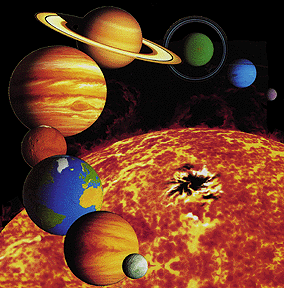
Light Years Space Vacations

For my "test" to finish my learning about our solar system, I had to create a travel brochure for a fictional space travel company.  I spent a lot of time on this!  I had to write it all by myself.  My Mom did NOT help me, and I wasn't allowed to just copy sentences from my books.  Then I had to edit and revise it twice.  I feel really good about my finished project.  I wish it were real so that I could book a vacation.  What do you think?
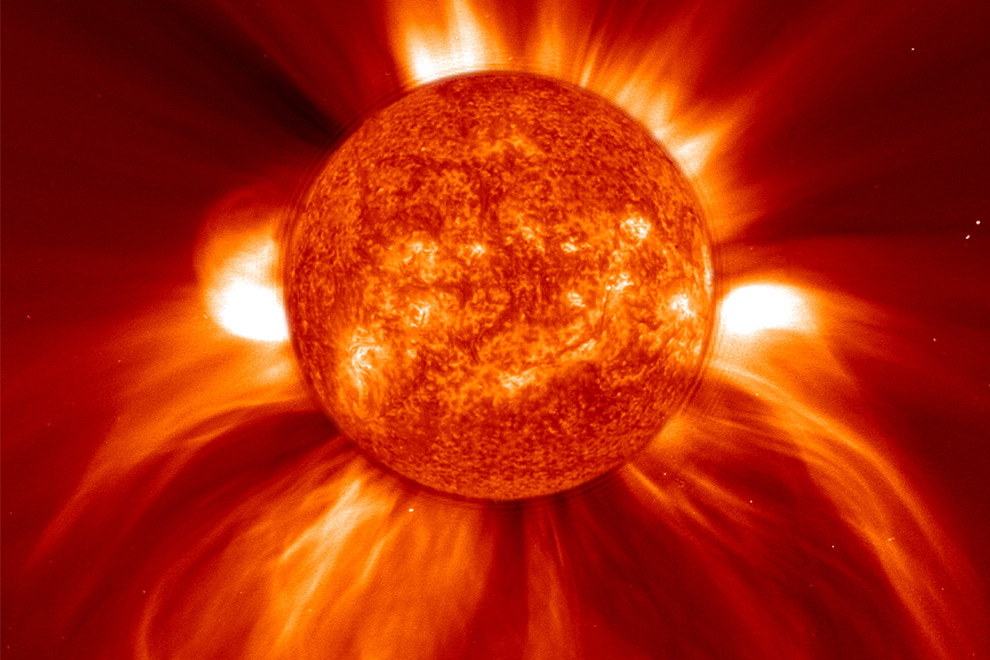

Light Years
Space Vacations


comet-power comments

Space and Leisure Magazine says: These trips will send you rocketing to the Moon!

AAA Space Travel says: These trips are out of this world!

Customer 1 said: I wish I could go on the trip again!

Customer 2 said: This was the best trip I have ever been on!


Package 1: HARD ROCKS!
Cost: $25,000 per person
Length: 7 days


Day 1: The Sun
  • We will take off and travel to the Sun. Wearing special glasses provided, we will view the Sun from the viewing room on the spacecraft. We will do one complete orbit around the Sun, then travel to Mercury and dock for the night.
  • The Sun is a star and is the center of our Solar System.
  • The Sun is a yellow dwarf, halfway through a ten-billion-year life.


Day 2: Mercury
  • We will land on Mercury and walk to see the Caloris Basin. Then we will dock at Venus.
  • Mercury is the most heavily cratered object in our Solar System.
  • An Earth year is shorter than a day on Mercury.

Day 3: Venus
  • We will walk to Venus' top sight, Gula Mons Volcano, and if we are lucky enough we will see it erupt. Then we will travel to the Earth's Moon and stay at the Moon's Welcoming Center.
  • Venus is made of the same materials as Earth.
  • Venus is considered Earth's evil twin; it is about the same size, but it is surrounded by clouds of sulfuric acid.

Day 4: The Moon
  • We will walk to Bailly Crater, which is 180mi or 290km across, and then we will stay one more night at the Welcoming Center.
  • The Moon had a volcano, but now it's covered with mare. Mare is dried lava.
  • The Moon is drifting away from the Earth at about 1in [3cm] per year.

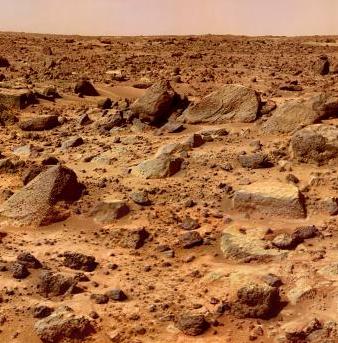
Day 5: Mars
  • We will land next to its top sight: Olympus Mons Volcano. Then we will dock at The Asteroid Belt.
  • The temperature on Mars is about -166-32F (-110-0C). Brrrr. Good thing you'll have a special space suit.
  • Mars used to be a blue planet flowing with water, but is now a rusty red planet of dried riverbeds.

Day 6: Asteroid Belt and Ceres
  • We will mine an asteroid for metal. Then we will visit the International Mining Station located on the dwarf planet Ceres.
  • There are more than 40,000 asteroids larger than .62 miles wide.
  • The largest object in the Asteroid Belt is Ceres. It is 585 miles wide.

Day 7: Home
  • We will fly back to Earth. You will be given a re-entry spa package including a decompression massage and moon dust facial.

We all love Earth!


Package 2: WHO'S GASSY?
Cost: $50,000 per person
Length: 10 days

DAY 1: Jupiter
  • Today we will fly to Jupiter and fly over the Great Red Spot. Then we will dock at one of Jupiter's moons.
  • There is no solid surface on Jupiter.
  • Jupiter has at least 63 moons.

Day 2: Four of Jupiter's Moons
  • Today we will visit some of Jupiter's moons: Lo, Europa, Ganymede and Callisto, then we will dock at Saturn.
  • Europa has a warm, salty ocean below its surface.
  • Lo, Europa, Ganymede and Callisto are the largest of 63 moons.

Day 3: Saturn
  • Today we will orbit Saturn, then dock at its moon Titan.
  • Saturn is the most distant planet visible to the naked eye.
  • Saturn's density is so low that if you put the planet in water it would float like a cork.

Day 4: Titan
  • Today we will mine for oil on Titan, then we will visit the best mining station and each passenger will receive a tube of oil. We will then travel to and dock at Uranus.
  • The surface pressure on Titan would feel like being at the bottom of a swimming pool.
  • Titan has seasonal weather just like Earth.


Day 5 : Uranus
  • We will orbit Uranus, then dock at its moon Miranda.
  • Uranus has a 98-degree tilt unlike any other planet in our Solar System
  • Uranus is 8 times the size of Earth.

Day 6: Uranus's Moon Miranda
  • Today we will visit Miranda, then we will head to Neptune.
  • From the moon we will see how Uranus glows like an aquamarine gem because of the methane gas in its atmosphere.
  • Uranus has 27 moons, the third highest number of moons behind Jupiter and Saturn.


Day 7: Neptune
  • Today we will go into Neptune, and while we slide through you will grab as many diamonds as you can. Then we will dock at its moon Triton.
  • Neptune is the smallest gas giant and the farthest planet from the Sun.
  • Like the rest of the gas giants, Neptune has no solid surface.


Day 8: Triton
  • Today we will hike to the best place to see Neptune. Then we will go see an ice volcano. Then we will stay one more night.
  • Triton is actually colder than Neptune.
  • Triton's ice volcano spews frozen methane flakes.

Day 9: Fly by Pluto
  • We will start the journey home, but first we will fly by Pluto.
  • Pluto is one of the coldest objects in the Solar System and the most famous dwarf planet.
  • When Pluto reaches its farthest distance from the Sun, its atmosphere freezes and falls to the ground where it looks like a thin coating of frosting.

Day 10: Home
  • We will re-enter Earth's atmosphere and every passenger will receive a free ticket to the re-entry spa.


Spacecraft
  • The S.F Miner runs on solar energy, so we will be traveling light years in a day's time.
  • The S.F Miner can hold up to 3,000 passengers.
  • The spacecraft also has a gym, library, and a movie theater, which are open from 8:00am-12:00am.
  • The spacecraft is climate controlled for your human comfort, so if your room needs more heat, then call the captain.
  • The spacecraft is gravity controlled so there will de no floating objects.


Rooms
  • The rooms have two beds, with the latest model bathroom and TV.
  • The bed is made out of the finest fabric, mainly silk. The pillows are filled with moon dust.
  • The bathroom has a shower with a TV in it, and the latest model of a space toilet.

Spacesuits
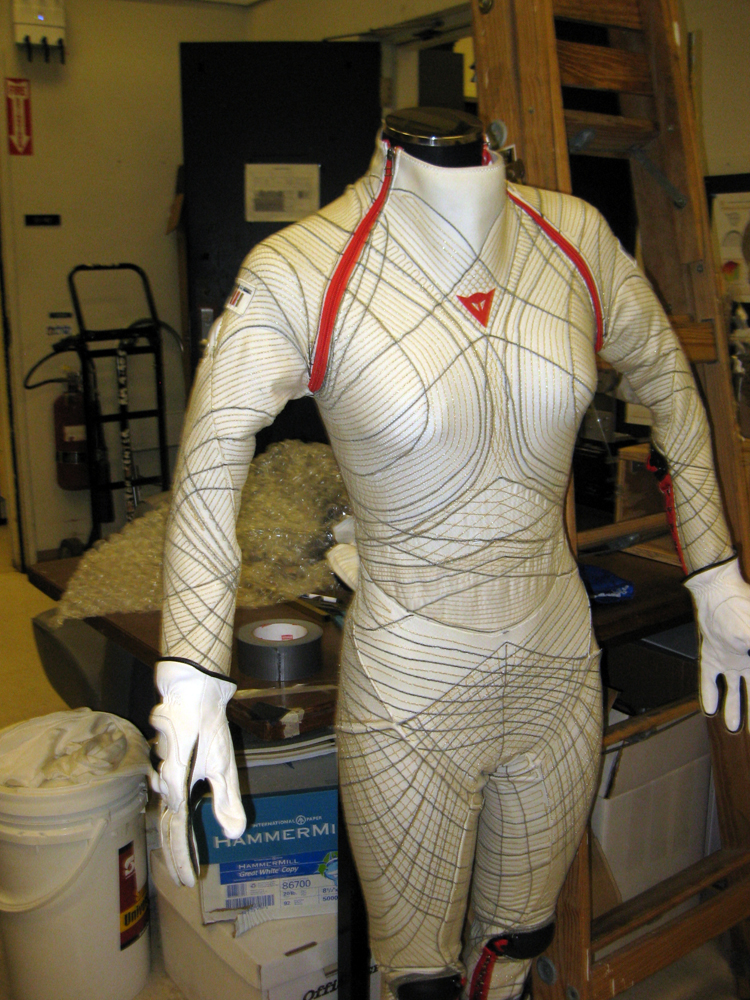
  • The spacesuits are the latest model from Hollywood's most famous clothes designer.
  • Your helmet will convert your carbon dioxide into oxygen.
  • The fabric will keep you safe from space weather.


Food
  • The award-winning chef, Kim Ellison, has superb space cooking experience, and has worked at the best restaurants in the Universe.
  • You will be served 3 meals a day with a snack in between.
  • The three drinks that are available are coffee, h2o, and tea.
  • The spacecraft has a green house that grows fruits and vegetables from around the world.


Entertainment
  • The gym has many fitness instructors to assist you on Mondays thorough Fridays.
  • The movie theater plays multiple new releases every night.
  • We will also have the Black Eyed Peas playing every Friday night at 5:00 pm.
  • The library will have story time for children on board.


Captain
  • Evalynn Ellison will be your Captain. She has 20 years of experience in space.
  • She has been a miner on the Astroid Belt and she is the owner of the International Mining Station.
  • She has also worked mining for oil on Titan, and owns the oil station there.
  • Evalynn began her career by reading:
    13 Planets – The Latest View of the Solar System by David A. Aguilar; and Astronomy: Out of This World! by Basher Science and Dan Green.
  • On Earth she owns the most famous pet shelter ever.


Contact
  • To reserve your out-of-this-world trip just call 1-800-GO SPACE or 1-800-467-7223.


Signing Off,
Evalynn and Mom